
Scalable Empathy: Why The Friendship Bench is the Ultimate Common Read for 2026
Posted by BookPal Marketing on Mar 03, 2026
The first few weeks of college are a whirlwind of move-in days, orientation mixers, and the frantic search for new friends. But beneath the surface of the "Best Four Years of Your Life" narrative lies a quieter, more persistent reality. According to recent student health surveys, nearly two-thirds of college students report feeling "very lonely" during their first year at college or university. As educators and First Year Experience (FYE) coordinators, we know that academic success doesn't happen in a vacuum; it happens when a student feels seen, heard, and grounded in their new community.
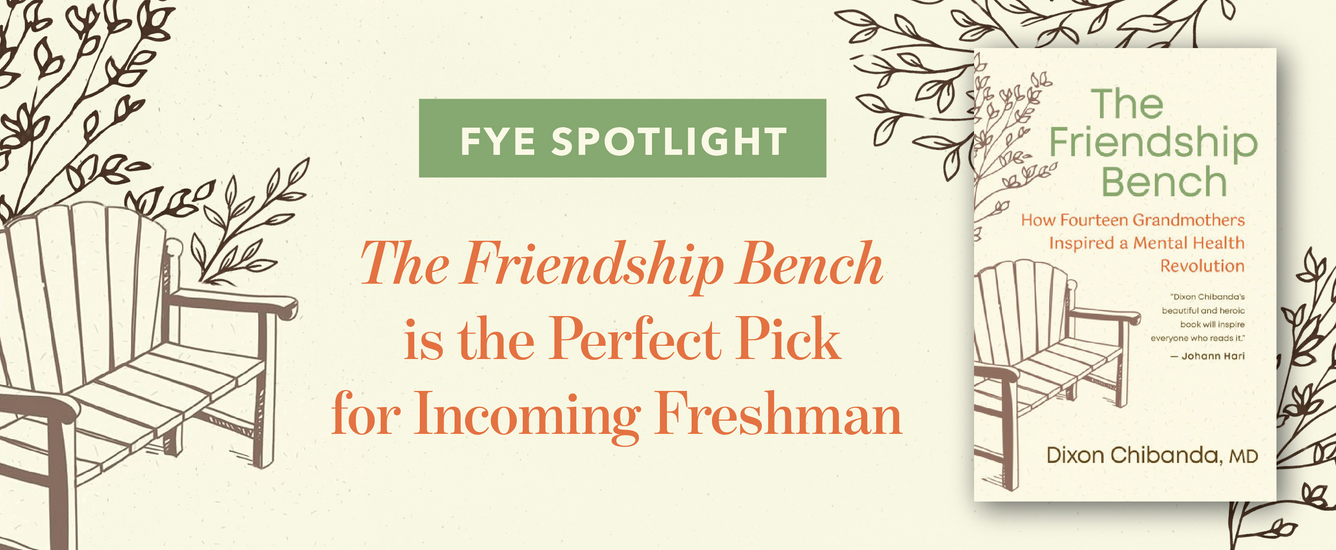
That is why we want to highlight BookPal’s 2025 OWL (Outstanding Works of Literature) Award winner for the FYE category, The Friendship Bench: How Fourteen Grandmothers Inspired a Mental Health Revolution by Dr. Dixon Chibanda.
Released just last year, this isn't just a book about global health; it’s a masterclass in the radical power of showing up for one another. Dr. Chibanda, one of the few psychiatrists in Zimbabwe, faced a monumental "treatment gap" and realized he couldn't solve a national mental health crisis alone. His solution? He moved the therapy out of the clinics and onto simple wooden benches, training local grandmothers to listen.
We believe that by selecting The Friendship Bench for your 2026-2027 program, you aren’t just giving your students a reading assignment. You are giving them a blueprint for empathy, a lesson in "frugal innovation," and a reminder that sometimes the most revolutionary thing you can do for a peer is simply pull up a seat.
Book Snapshot: The Story of the Benches
At its heart, The Friendship Bench is a story of radical problem-solving. In the early 2000s, Dr. Dixon Chibanda was one of only a handful of psychiatrists serving Zimbabwe’s population of millions. Faced with a staggering "treatment gap" and a rising tide of mental health struggles, he realized that the traditional clinical model, with white coats, sterile offices, and expensive appointments, was never going to reach the people who needed it most.
His solution was as simple as it was revolutionary: The Grandmothers.
Dr. Chibanda began training local, respected community grandmothers in the basics of evidence-based talk therapy. These women didn’t operate out of hospitals; they sat on plain wooden benches in the community, inviting anyone in distress to sit and talk.
In the Shona language, the concept of depression is often described as Kufungisisa, or "thinking too much." The grandmothers’ mission was to help their neighbors through the process of "opening up the mind." By moving mental health care out of the shadows and onto a public bench, they didn't just provide therapy; they transformed the cultural landscape of their communities.
What Makes The Friendship Bench the Most Impactful FYE Book for Today’s Students?
Selecting a Common Read is a delicate balancing act. You need a book that is academically rigorous enough for a seminar but accessible enough for a late-night dorm discussion. The Friendship Bench hits that "sweet spot" by offering profound value across multiple disciplines while addressing the core social needs of a transitioning student.
Here is why this narrative is the perfect fit for your 2026-2027 students:
- Resilience as a Community Resource: The book proves that when professional resources are scarce, a community’s greatest asset is its people. For a freshman feeling lost in a sea of thousands, this is a vital reminder that support can be found in unexpected places.
- Mastering "Frugal Innovation": Dr. Chibanda’s work shows how to solve massive problems with limited resources by using existing community assets. This challenges all students from STEM to Business and everything in between to think creatively about high-impact, low-cost solutions in their future fields.
- The Radical Power of Listening: In a world of digital noise, Dr. Chibanda highlights the healing power of being truly heard. It’s a skill we want every new student to develop as they build their first friendships in college.
- Destigmatizing the Struggle: By placing "therapy" on a bench in the middle of a park, the project stripped away the shame often associated with mental health. It normalized the idea that everyone, at some point, needs a place to sit and talk.
- Expanding Global Perspectives: By exploring Kufungisisa and Zimbabwean healthcare, the book moves beyond Western-centric models. It is an ideal text to help students decenter their own perspectives and appreciate global brilliance.
- Becoming a "Holder of Hope": One of the book's most moving takeaways is that you don’t need a PhD to save a life. You just need empathy, presence, and a willingness to listen. It empowers students to realize they can be "holders of hope" for one another on their own campus.
The Loneliness Epidemic: Why This Book is More Urgent Than Ever
The first six weeks of college are often cited as the most critical window for student retention, but they are also the most vulnerable. Behind the curated "perfection" of social media, many incoming students are quietly navigating a profound sense of isolation as they leave behind lifelong support systems. That’s why providing a book like The Friendship Bench can be so impactful.
Dr. Chibanda’s work reminds us that we don’t always need a formal appointment or a clinical setting to begin healing; sometimes, we just need a low-stakes place to sit. By teaching students that a simple, attentive conversation in a dining hall or a dorm lounge can literally save a life, this book empowers them to look out for one another. It transforms the daunting task of "making friends" into the accessible act of "being a listener," giving students the agency to build a culture of care from their very first day on campus.
Ready to Sit? Fun and Impactful Ways to Implement Your 2026 Common Read
The beauty of Dr. Dixon Chibanda’s model is its simplicity. You don't need a massive budget or a new building to make an impact; you just need a space for connection. Here are several ways to translate the lessons of The Friendship Bench into actionable programming for your first-year students:
- The "Student-to-Student" Peer Support Model: While they aren’t grandmothers, your RAs, Orientation Leaders, and Peer Mentors are the heartbeat of campus. Use the book as a training manual for these student leaders, teaching them the "opening up the mind" techniques to identify peers who are "thinking too much" (struggling with the transition) and offering a supportive, non-clinical ear.
- Physical "Friendship Benches" on the Quad: Create a visible, lasting legacy of your Common Read by installing designated "Friendship Benches" in high-traffic areas. Encourage the Art Department or incoming students during orientation to paint these benches with themes of hope and connection. These serve as a permanent signal that your campus is a place where it is okay to ask for a moment of someone’s time.
- "Opening Up the Mind" Orientation Workshops: Host interactive sessions based on the book’s principles. Instead of a standard lecture, lead students through a "Kufungisisa" workshop where they identify common stressors and learn the basic active-listening tools used by the grandmothers. This gives students a "mental health toolkit" to help them when they are feeling overwhelmed.
- The "Sit With Me" Social Campaign: Launch a campus-wide challenge during the first six weeks. Faculty, staff, and student leaders can wear "Ask Me to Sit" buttons, signaling to new students that they are available for a 10-minute chat. It’s a simple way to break down the "invisible barriers" between different members of the campus community.
- Cross-Disciplinary "Bench Talks": Partner with different departments for small-group discussions held outdoors. A Sociology professor might lead a talk on community resilience, while a Business professor discusses the "frugal innovation" of the project. This moves the academic conversation out of the classroom and into the community, just as Dr. Chibanda intended.
- A "Letter to My Future Self" Activity: Following the book’s theme of resilience, have students write letters during their first FYE seminar about their own "holders of hope": the people or practices they turn to when things get tough. Return these letters to them during midterms or finals week as a reminder of the community they are building.
Ready to Transform Your First-Year Experience? Let’s Get Started.
At its core, Dr. Dixon Chibanda’s work teaches us one profound truth: hope is a resource. It isn’t just a feeling; it is something that can be cultivated, shared, and scaled. By selecting The Friendship Bench for your 2026-2027 Common Read, you are sending a powerful message to your incoming students from the moment they receive their orientation packet: You are not alone, and you have the inherent power to make others feel seen.
In a world that often feels increasingly fragmented, this book provides your incoming class with a shared language of resilience and a practical toolkit for empathy. It turns the "First-Year Experience" into a collaborative effort where every student, faculty member, and staff member has a part to play in holding hope for one another.
Let’s Build Your 2026 FYE Program Together
There’s a reason The Friendship Bench is our 2025 OWL Award winner, and we’d love to help you bring its message to your students. Ready to take the next step? Reach out to our team to get started on planning your 2026-2027 program and secure The Friendship Bench for your campus. We’re here to help with everything from book sourcing to custom programming resources. Not sure if this is the one? Visit our FYE/Common Read page to browse other titles that are making a difference on campuses nationwide.