How Schools Can Spend Year-End Budget on Books
Posted by BookPal Marketing on May 13, 2026
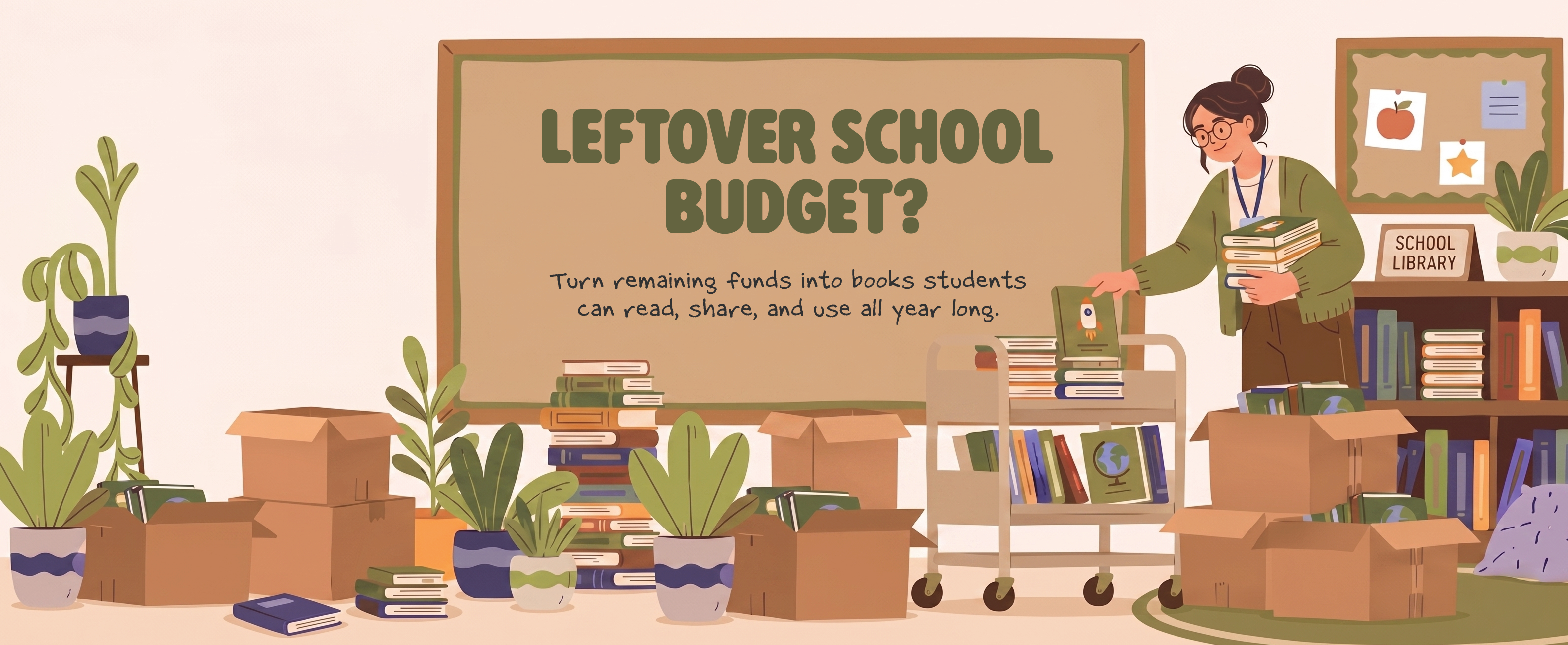
Many schools reach the end of the fiscal year with remaining funds that need to be spent quickly and responsibly. But finding the right purchase can be challenging, especially when administrators, librarians, and educators need something that is practical, student-centered, and easy to justify.
Books are one of the most flexible ways to turn unused school budget into lasting value. Whether schools need to refresh classroom libraries, support summer reading, purchase novel sets, or provide books for literacy programs, bulk book orders can help remaining funds directly benefit students.
This guide explains how schools can use leftover budget before the fiscal year ends by investing in books that support literacy, learning, and engagement.
Key Takeaways:
- If schools don’t use the remaining fiscal-year budget before the deadline, they may lose access to those funds.
- Books are a practical year-end purchase because they are flexible, durable, and directly tied to student learning.
- Schools can use remaining funds to support classroom libraries, book clubs, intervention programs, multilingual learners, SEL collections, and schoolwide reading initiatives.
- BookPal can help schools quickly build custom bulk book lists and request quotes before fiscal-year deadlines.
Why Should Schools Spend Their Remaining Budget?
Unused school budget may not roll over into the next year. If funds are not spent before the fiscal-year deadline, schools may lose access to that money.
It can also affect future planning. If a school does not use its full budget, decision-makers may assume it does not need as much funding next year.
The goal is not to spend money just to spend it. The goal is to use remaining funds on something practical, student-centered, and easy to put into action. Books check all three boxes.
Why Use Leftover School Budget on Books?
Books are flexible, useful, and tied directly to student learning making them a worthy investment. A year-end book order can help schools:
- Refresh classroom libraries
- Replace damaged or missing books
- Prepare for next year’s curriculum
- Add new titles to the school library
- Build SEL or multilingual learner collections
- Support summer reading
Books also work across many needs. A single bulk order can support one classroom, a full grade level, a summer program, or an entire school. The possibilities are endless!
What Types of Books Should Schools Buy With the Remaining Budget?
The best books to buy with the remaining school budget are the ones that fill a real need. Before choosing titles, think about where books will make the biggest difference for students and teachers. That may mean replacing worn classroom favorites, preparing for next year’s curriculum, giving students books to read over summer break, or adding more high-interest titles to the library.
A good year-end book order does not need to cover every possible category. It should be focused, useful, and easy to put into action.
- Classroom library books are a good place to start. They become worn, outdated, lost, or no longer reflect what students are excited to read. Adding fresh titles can help teachers keep students engaged and make independent reading time more meaningful.
- Novel sets are another practical option, especially if teachers already know what they plan to teach next year. Buying these books before the fiscal year ends helps schools prepare early and gives teachers the copies they need for whole-class reading and small-group discussion
- Summer reading books are especially helpful when schools want the remaining budget to benefit students right away. Sending students home with books before break can support continued reading over the summer and give families access to reading materials outside the classroom.
- Library refresh titles can also make a big impact. Librarians often know which books have long waitlists, which sections need updating, and which student favorites need replacing. The remaining budget can help add new releases, replace damaged copies, and expand the types of books students are already looking for.
Schools may also want to use leftover funds for targeted collections, such as social-emotional learning books, multilingual learner titles, bilingual books, high-interest nonfiction, graphic novels, or culturally relevant books. These purchases can support specific student groups while helping more students see themselves and their experiences reflected in what they read.
How Can Schools Choose the Right Books Before the Fiscal Year Ends?
When the deadline is close, keep the process simple.
Ask teachers what needs replacing
Teachers know which books students love and which ones are falling apart.
Ask:
- Which books are damaged or missing?
- Which titles do students request most?
- Which genres do you need more of?
- What books would support next year’s lessons?
- Do you need more copies of any specific titles?
This helps schools buy books that will actually get used.
Ask librarians where demand is highest
Librarians can quickly identify gaps based on circulation, waitlists, student requests, and worn-out sections.
They may suggest replacing popular books, expanding graphic novels, updating nonfiction, or adding more books for specific grade levels.
Match the order to a goal
Choose books based on what the budget should support.
For example:
- For summer learning, buy take-home book packs.
- For curriculum support, buy novel sets.
- For student engagement, buy high-interest titles.
- For intervention, buy accessible small-group books.
- For equity, buy diverse, multilingual, and culturally relevant books.
Confirm the details before ordering
Before placing a bulk order, know:
- Budget amount
- Purchase deadline
- Grade levels
- Quantity needed
- Shipping timeline
- Whether a quote or purchase order is required
Having these details ready makes the process faster.
Ways to Use Bulk Books for Year-End School Budget
Build student book packs
Create take-home packs for summer reading, family literacy nights, incoming students, or reading intervention groups.
Example: Give every rising fourth grader one fiction book and one nonfiction book before summer break.
Launch a schoolwide reading program
Use bulk books for a shared reading experience, such as One School, One Book, family reading nights, or a schoolwide read-aloud.
Prepare for next year’s curriculum
Order books now for fall units, novel studies, author studies, or upcoming classroom themes.
Support reading intervention
Use remaining funds for small-group books, decodable readers, high-low titles, nonfiction, or graphic novels that make reading practice more engaging.
How BookPal Helps Schools Spend Remaining Budget on Books
BookPal helps schools turn remaining budget into bulk book orders quickly and easily.
Schools can use BookPal to:
- Request a bulk book quote
- Order multiple copies of a title
- Build custom book lists
- Create student book packs
- Find books by grade level, theme, or program
- Support classroom, library, or district-wide needs
This is helpful when schools know they have funds to spend but need guidance on what to buy. With the right support, schools can move from leftover budget to a clear, useful book order before the fiscal year closes.
Turn Leftover School Budget Into Books Students Can Use
Leftover school budget should not go unused. If schools do not spend it before the fiscal-year deadline, they may lose access to those funds and risk receiving a smaller budget in the future.
Books are a practical way to use remaining funds with purpose. They support literacy, strengthen classrooms and libraries, prepare students for summer, and give teachers more resources for the year ahead.
Ready to use your remaining school budget before the fiscal year ends? Request a bulk book quote from BookPal and get help building a custom order for your students.