null
Loading…
Skip to main content Skip to buy box

Holiday gifts by Fri, Dec 18? Order by Thu, Dec 3. Plan gifts Gifts by Dec 18? Order by Dec 3. Plan

Free shipping on most orders over $95 in the contiguous US

Specialists Mon–Fri, 8:30 am–5 pm PTSpecialists Mon–Fri, 8:30–5 PT866-522-6657

Printed to order
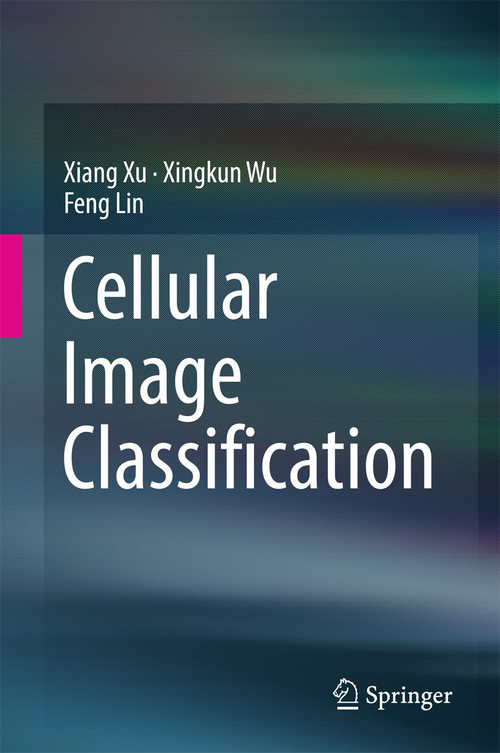
Cellular Image Classification book cover by Xiang Xu, Xingkun Wu, Feng Lin
Hardcover

Cellular Image Classification

by Xiang Xu, Xingkun Wu and Feng Lin

From $96.79 / copy at 25+ copies; lower per-copy prices at higher quantities (see Volume pricing) As low as $94.59 at 100+

Total $2,419.75

Hardcover · 137 pages Springer International Publishing · 2016

Format

Hardcover
Volume pricing

The more copies, the less each one costs

Applied automatically in your cart. No code needed.

About the book

Cellular Image Classification

This book introduces new techniques for cellular image feature extraction, pattern recognition and classification. The authors use the antinuclear antibodies (ANAs) in patient serum as the subjects and the Indirect Immunofluorescence (IIF) technique as the imaging protocol to illustrate the applications of the described methods. Throughout the book, the authors provide evaluations for the proposed methods on two publicly available human epithelial (HEp-2) cell datasets: ICPR2012 dataset from the ICPR'12 HEp-2 cell classification contest and ICIP2013 training dataset from the ICIP'13 Competition on cells classification by fluorescent image analysis.
 
First, the reading of imaging results is significantly influenced by one’s qualification and reading systems, causing high intra- and inter-laboratory variance. The authors present a low-order LP21 fiber mode for optical single cell manipulation and imaging staining patterns of HEp-2 cells. A focused four-lobed mode distribution is stable and effective in optical tweezer applications, including selective cell pick-up, pairing, grouping or separation, as well as rotation of cell dimers and clusters. Both translational dragging force and rotational torque in the experiments are in good accordance with the theoretical model. With a simple all-fiber configuration, and low peak irradiation to targeted cells, instrumentation of this optical chuck technology will provide a powerful tool in the ANA-IIF laboratories. Chapters focus on the optical, mechanical and computing systems for the clinical trials. Computer programs for GUI and control of the optical tweezers are also discussed.
 
to more discriminative local distance vector by searching for local neighbors of the local feature in the class-specific manifolds. Encoding and pooling the local distance vectors leads to salient image representation. Combined with the traditional coding methods, this method achieves higherclassification accuracy.
 
Then, a rotation invariant textural feature of Pairwise Local Ternary Patterns with Spatial Rotation Invariant (PLTP-SRI) is examined. It is invariant to image rotations, meanwhile it is robust to noise and weak illumination. By adding spatial pyramid structure, this method captures spatial layout information. While the proposed PLTP-SRI feature extracts local feature, the BoW framework builds a global image representation. It is reasonable to combine them together to achieve impressive classification performance, as the combined feature takes the advantages of the two kinds of features in different aspects.
 
Finally, the authors design a Co-occurrence Differential Texton (CoDT) feature to represent the local image patches of HEp-2 cells. The CoDT feature reduces the information loss by ignoring the quantization while it utilizes the spatial relations among the differential micro-texton feature. Thus it can increase the discriminative power. A generative model adaptively characterizes the CoDT feature space of the training data. Furthermore, exploiting a discriminant representation allows for HEp-2 cell images based on the adaptive partitioned feature space. Therefore, the resulting representation is adapted to the classification task. By cooperating with linear Support Vector Machine (SVM) classifier, this framework can exploit the advantages of both generative and discriminative approaches for cellular image classification.
 
The book is written for those researchers who would like to develop their own programs, and the working MatLab codes are included for all the important algorithms presented. It can also be used as a reference book for graduate students and senior undergraduates in the area of biomedical imaging, image feature extraction, pattern recognition and classification. Academics, researchers, and professional will find this to be an exceptional resource.


Details

Publisher
Springer International Publishing
Authors
Xiang Xu, Xingkun Wu, Feng Lin
Format
Hardcover
Published
Nov 24, 2016
ISBN-13
9783319476285
Pages
137
Printing
Printed on demand
Buying for a group

Cellular Image Classification for groups: pricing

Volume pricing applies automatically in your cart. No codes, no account needed.

CopiesPrice per copyYou save
25 – 49 $96.79 12% off list
50 – 99 $95.69 13% off list
100+ $94.59 14% off list
Ways groups use it

Popular for

1
Course and classroom adoption

A copy for every student in the class or section.

2
Faculty and staff book studies

Shared reading for professional development.

3
Orientation and campus events

Common reads and first-year programs.

Where can I buy 100 copies of Cellular Image Classification?

BookPal sells Cellular Image Classification in quantity. At 100 copies the price is $94.59 a copy, against a list price of $109.99, and the cart applies the volume tier automatically. Free shipping on most orders over $95 in the contiguous US. A specialist can quote a larger or mixed order.

  • New books only, straight from the publisher
  • Volume prices apply automatically in the cart, with no code needed
  • Order at least 10 business days before you need the books (11 from mid-November through December)

Ask a specialist about a larger or mixed order

What does Cellular Image Classification cost when I buy for a group?

Volume pricing applies automatically in your cart, with no code needed. Price per copy: 25 to 49 copies, $96.79 (12% off list); 50 to 99 copies, $95.69 (13% off list); 100+ copies, $94.59 (14% off list). Need a different quantity, or a quote to forward for approval? Ask a specialist and we will confirm pricing before you pay.

How fast can I get copies of Cellular Image Classification?

This title is printed on demand, so it needs production time before it ships. Need them by a specific date? Request a quote and we'll confirm timing before you pay.

Can you ship to several locations or people's homes?

Yes. We ship group orders to one address, to multiple sites, or to individual recipients, in the US and internationally. See fulfillment options.

Can I get a formal quote for approval before ordering?

Yes. Request a quote and we'll send a PDF you can forward for approval.

Do you accept purchase orders and tax-exempt orders?

Yes. We accept purchase orders upon approval, as well as cards, PayPal, ACH, wire transfers and checks. BookPal is a tax-exempt supplier in all 50 states. See purchase orders and sales tax exemption.

What if I find a lower price?

Send us the link. We match prices from other booksellers and distributors on a new copy in the same edition, available to ship in the quantity you need. Clearance sales and pricing errors are the exception, and we'll tell you quickly if that's the case. Start a price match.

Send for approval

Get a yes from your approver

Cellular Image Classification
Email it to my approver

Your approver gets a link to this page with the quantity set and an "Approve and order" button. Nothing is sent until you press send in your email app.

Log In
Review Your Cart
Your cart is empty Your cart is empty Your cart is empty

Menu

Recently Viewed Recently Viewed
Back to top Back to top